Leave a comment

2011 in review

The WordPress.com stats helper monkeys prepared a 2011 annual report for this blog.

Here’s an excerpt:

A New York City subway train holds 1,200 people. This blog was viewed about 4,100 times in 2011. If it were a NYC subway train, it would take about 3 trips to carry that many people.

Click here to see the complete report.

Leave a comment

Travels in Peru

English: Colca Canyon, Arequipa, Peru Français...

Image via Wikipedia

I met Martha in London last November and we talked about Peru. “Late April is the best time to visit,” she said. “The countryside is green and lush after the rains and the crowds are still waiting for June.” I asked her about the Amazon. “A camp is good enough. The cruise boats cost four times more” she smiled. Few weeks later, I had the private tour itinerary I wanted, the cost looked reasonable and now I am ready to take the plunge.

The easiest way to fly to Lima from the north of England is with KLM from Leeds/Bradford airport via Amsterdam. It is important to make sure that the transit time in Amsterdam is al least two hours to ensure that you do not miss your connection and that your luggage travels with you. The Leeds office of Trailfinders will make you your flight arrangements efficiently at a reasonable price.

Day 1: I arrive in Lima and am transferred to Estelar Hotel, where I have a briefing about the itinerary.

Day 2: Lima I get acquainted with Peru’s Capital City and its 2000 years of history and colonial heritage. I tour Lima’s Historical Center, admire its imposing Cathedral, visit Casa Aliaga – America’s best-preserved colonial mansion occupied by the same family since 1535, visit San Francisco Monastery, a masterpiece of colonial architecture housing colonial paintings and drive through the residential districts of Miraflores and San Isidro with views of the Pacific Ocean and its beaches before returning to Estelar Hotel.

Day 3: Lima/Paracas/Nazca. I drive to Paracas, approximately four hours from Lima stopping en route to see the vineyards of Pisco.  At the dock, I take a boat to the Ballestas Islands, inhabited by boobies, pelicans, sea lions and Humboldt penguins.  The boat will make a stop in front of the peninsula to view the unexplained figures of the Candelabro Lines.   I drive to Nazca to stay at the 3 star Nazca Lines Hotel. http://www.tripadvisor.com/Hotel_Review-g304044-d318227-Reviews-Hotel_Nazca_Lines-Nasca.html

Day 4: Nazca/Arequipa In the morning I take a high-wing light aircraft over the desert and the Nazca Lines and continue my journey to Arequipa to stay at El Cabildo Hotel for two nights. www.cabildohotel.com http://www.tripadvisor.com/Hotel_Review-g294313-d455292-Reviews-El_Cabildo-Arequipa.html

Day 5: Arequipa. I visit the Historic Center of Arequipa, a Unesco World Heritage Site, built mostly with a local sillar, a pale volcanic rock and Plaza de Armas and Cathedral, before visiting the Convent of Santa Catalina, founded in 1580. With an area of 20,000 square meters, the Convent is a city in miniature, a walled fortress with streets, passageways, stairways and plazas. I visit the Jesuit Church, considered to be the best example of the mestizo baroque style in Arequipa.  Finally I go to the residential districts of Yanahuara and Chilina, with magnificent views of Arequipa’s countryside and Mount Misti volcano.

Colca River

Colca River, Image via Wikipedia

Day 6: Arequipa/Colca.I start early morning for the drive to the Colca Valley, across Pampa Cañahuas within the Aguada Blanca National Reserve, the habitat of herds of vicuñas and pre-Columbian terraces still being cultivated. Lunch will be at Balcon Don Zacarias Restaurant and overnight at Casa Andina Cola Hotel. www.travelrepublic.co.uk/Colca-Canyon

A condor (Vultur gryphus) flying over the Colc...

Condor, Image via Wikipedia

Day 7: Colca / Puno I drive early to “Condors’ Cross” – the observation point from where one can view these great Andean birds. Colca Canyon is one of the deepest in the world  (3,000 mts/ 9,800 ft). After lunch at Casa Andina Colca, I continue to Puno across the Peruvian high plateau with clear blue skies and Ichu, the unusual   highland   vegetation. Four Star Casa Andina Private Collection is my base for two nights in Puno. www.casaandina-privatepuno.hotel-rn.com, http://www.tripadvisor.co.uk/Hotel_Review-g298442-d625816-Reviews-Casa_Andina_Private_Collection_Puno-Puno.html

Day 8: Puno. The day is spent sailing in Titicaca Lake, the highest navigable lake in the world, and visiting the floating islands of Uros, where the inhabitants still live as they did centuries ago, on floating islands they make with the totora reeds that grow on the lake.  I continue sailing towards Taquile Island for a 30-minute hike towards its small town inhabited by Quechua speaking natives who have, over the generations, developed both an efficient and original social system as well as a refined hand weaving technique. Lunch is served in a local house that serves as a restaurant and we continue to explore the island before returning to Puno.

I take a day trip to Tiwanaku and Sukakollos in Bolivia.

Day 9: Puno/Cusco. I take the ten-hour Andean Explorer train to Cusco along dramatic landscapes of the highland plateau with little Andean villages and herds of llamas and vicunas and check into Novotel Hotel for three nights.


Day 10: Cusco. I tour the city, starting at the Santo Domingo convent monastery, which previously was the Koricancha temple, one of the most important Inca temples devoted to worship of the sun.  It was covered in gold kleaf and filled with golden objects. I stop at the Plaza de Armas and the Cathedral and drive to the countryside outside Cusco to visit some of the remarkable Inca ruins in the area such as the cult center of Sacsayhuaman, the temple and amphitheater of Kenko, and the Red Fortress of Puca Pucara.

Day 11: Cusco/Sacred Valley/Cusco. I drive to the Urubamba valley, the Sacred Valley of the Incas, to visit the Inca fortress of Ollantaytambo, built just as the Spaniards arrived with evidence of how it was constructed still visible and stroll through the quaint streets of today’s town. I continue to Pisac to haggle with vendors at its handicraft market and to have Lunch at a local Restaurant.

Day 12: Cusco / Machu Picchu. I take the morning train from Ollantaytambo station to Machu Picchu. A 25-minute motor-coach ride takes me to “The Lost City of the Incas”, which was discovered by American explorer Hiram Bingham in 1911, for a guided tour of the marvelous citadel. I lunch at the luxury Sanctuary Lodge Restaurant and stay overnight at “EL MAPI” MACHU PICCHU HOTEL

Day 13: Machu Picchu/Cusco. I take an early morning second entry to the ruins on my own and later visit the private art gallery:   “Machu Pictures – Inspiring Views of the Sanctuary”, located within Cafe Inkaterra in Machu Picchu pueblo, near the rail station using a privileged access created for me. In the afternoon, I return to Cusco by train to Ollanta station for another night at NOVOTEL HOTEL

Day 14: Cusco/Puerto Maldonado. I fly to Puerto Maldonado. And take a twenty-five-minute motorboat ride down the Madre de Dios River to the starting point of a half-an- hour trek.  After arriving at a small channel, I board a dugout canoe for the short trip to Lake Sandoval.  I continue the journey on a catamaran to Sandoval Lake Lodge.  After lunch, I board the catamaran again to visit the west side of the lake and in the early evening, observe the macaws arriving. After dinner, I take a canoe expedition in search of the black caiman. Sandoval lake lodge is my base for two nights.

Day 15: Puerto Maldonado. I Wake up at dawn to be at the lake at sunrise for a hopeful encounter with the family of giant otters frequently visiting the lake.  There is a chance of seeing the rare prehistoric looking hoatzin birds. After breakfast, I walk through the upper jungle near the lake to see towering wild Brazil nut trees and a demonstration of natives’ techniques to collect, open, pack and commercialize the product, an important economic activity in the area.  After lunch, I visit to the east area of the lake to spot some of the five species of monkeys inhabiting the place, especially the remarkable brown capuchin and after dinner, I take a night walk to observe nocturnal wildlife.

Day 16: Puerto Maldonado/Lima. I fly back to Lima and have a free day.

Day 17: I take the flight home.

Do you approve? Revisit me in May 2012 and I will tell you how it went.

Leave a comment

Classic Wine Events – 2012

Harrogate Medical Wine Society holds at least one wine event a month, mostly seated, tutored tastings. Tastings are open to Members and guests. Dry biscuits, water, tasting sheets and spittoons are provided. Complimentary tea and coffee are available after the tasting. Tickets cost £15. Here’s the 2012 programme:

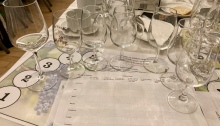
Rhone Revisited” - January19. Presented by Dr. Mike Toop.

  • Domaine du Vieux Telegraph 2000, 1997, 1996
  • Chateau de Beaucastle 1995, 1994, 1989
  • Domaine Thalabert 1998, 1995.

Comments:

  1. “We went to Mike Toop’s Rhone revisited tasting last night which was interesting as his cellar is very cold and the wines have aged more slowly than those that Jancis Robinson had tasted. I personally was not too thrilled by them and strangely enough the oldest one (1989) was the most palatable. Most people agreed on that. It was quite a quick tasting as we had 3 glasses at once, I suppose a vertical tasting really and we were finished well before 9pm.”
  2. “It was a very interesting tasting, as it showed the potential for elegance as well as power in good Chateauneuf du Pape. The 97 Telegraph and 89 Beaucastel showed this with their lighter style, while the 96 Telegraph was a great example of the brooding power that can impress with food. Getting these wines into your cellar now would be an expensive exercise, so good luck to anyone holding them.”
  3. “Good evening with Mike Toop tasting wines that we could never afford. One bottle clearly corked; good education.”

G’Day Oz” – February 23.       A selection of quality Australian wines Presented by Dr. Alisdair Stewart

  • Knappstein Clare Valley Hand Picked Riesling 2010
  • The Florita 2008 Clare Valley Riesling
  • Tyrrell’s Hunter Valley Semillon 2009
  • Tyrrell’s Hunter Valley Vat 1 Semillon 2003
  • McWilliams Mount Pleasant Elizabeth Semillon 2005
  • Pierro Margaret River Pinot Noir 2003
  • Torbreck Cuvee Juveniles 2009
  • Vasse Felix Cabernet Merlot 2009
  • Pierro Margaret River Cabernet Merlot 2003
  • De Bortoli Noble 1 Botrytis Semillon 2007

Rioja – A new Look At An Old Friend” – March 29. Presented by Ian Botwright

Wines of Alvaro Espinoza and Von Siebenthal - April 19. Presented by Andy Barton.

Alvaro Espinoza:

  • Novas ‘Limited Selection’ (Casablanca) Sauvignon Blanc 2010
  • Novas ‘Winemakers Selection’ (Casablanca) Chardonnay/Viognier/Marsanne 2007
  • Novas ‘Winemakers Selection’ (Colchagua) Syrah/Mourvedre 2006
  • Coyam (Cochagua) 2008
  • Kuyen (Maipo) 2004
  • Antiyal (Maipo) 2004

Von Siebenthal (www.vinavonsiebenthal.com)

  • Carmenere 2008
  • Parcela 2007
  • Carabantes 2007

Champagne -The Old Degorgments Case by Bruno Paillard, May - Presented By Dr. Bernard Dias

Starting in 1983, Bruno Paillard wrote the date of disgorgement on every bottle of champagne he produced. “He   saw the post-disgorgement ageing time as critical for the wine to recover the balance between freshness and softness of the dosage.” He thought the wine passes through 5 or 6 stages in its development: Age of Fruit, Age of Flower, Age of Spices, Age of Toast and Age of Fullness. “It takes a minimum of 4-5 years after disgorgement for a wine to develop spiced notes and even decades to attain full maturity.” To illustrate the variation that post-disgorgement ageing can create, Paillard has released an “Old Degorgements Collection” with the NV Brut Premiere Cuvee having the same assemblage and dosage (7g) but disgorged 6 months, 3 years, 6 years, 8 years and 10 years before release. (source Sommelier Journal, Link:  http://www.sommelierjournal.com/articles/article.aspx?year=2011&month=10&articlenum=82)

In November 2011, I visited Champagne Bruno Paillard in Reims, met Alice Paillard and purchased a case of Old Degorgements Collection. This is the case of champagne that will be tasted in May 2012 by a maximum 12 enthusiastic members of the HMWS.

4 Comments

Leonardo da Vinci at the National Gallery

Poland

Image via Wikipedia

Fifteen members of the Harrogate Medical Wine Society and fifteen guests travelled to London from Harrogate on Friday 9 December 2011 for the Leonardo da Vinci Exhibition at the National Gallery.

TRAVEL: A VIP coach with two drivers was used for the 5 hr. journey each way, starting at 6.30 am in Harrogate. Lanson, Canard-Duchene, Manzanilla and Hunter’s Riesling 2010 were drunk after breakfast on the coach and a DVD of the last HMWS Champagne tour was watched. Pizza Express on the Strand provided sustenance for the journey back, to be washed down with Hunters’ Pinot Noir 2009 and Muscat de Saint Jean de Minervois, Domaine de Barroubio 2009 and Grappa for the coffee and mince pies that followed.

LONDON: It was a glorious day with sunshine and blue skies. Trafalgar Square was buzzing. The coach stopped right at the entrance to the National Portrait Gallery. Most had lunch at The National Café, high ceilinged, spacious and classy. Waiters were attentive and courteous. Carpaccio (£5.50), Mixed leaves (£3.75), Fish of the Day (£15.50), Caesar Chicken (£11.50), Osso Buco (£14), Risotto (£13.50) and Affogato (£5) from the special Leonardo da Vinci menu were well received. Antinori’s Chianti Classico 2007 (£34), though a bit young, was delightful.

THE EXHIBITION: The atmosphere was relaxed and security non-obtrusive. There were no barriers in front of the paintings and access was easy. The subdued lighting made it hard to see some of the faded sketches from a distance. “The Lady with an Ermine” depicting Ludovico Sforza’s mistress, “The Belle Ferronniere” thought to be the portrait of Sforza’s wife are works of great beauty and appear to capture both reality and motion. Of the two “Virgin of the Rocks” the earlier version was more appealing with its softness of texture and exquisite beauty and purity of the Virgin. “Christ as Salvator Mundi” is stunning and at the same time, haunting and ‘disturbing.’ The softness and tones of the Masters work were so much more appealing and precise at the same time, compared to the ‘starkness’ of the paintings of his pupils, except for “The Madonna Lia” by Francesco Galli and Giovanni Antonio Boltraffio’s “The Madonna of the Rose”. Housing Giovanni Pietro Rizzoli’s full-scale copy of “The Last Supper” (about 1520) away from the main exhibition distracted a little but was a stunning finale to a fantastic exhibition.

CONCLUSION: Truly a ‘once in a lifetime’ experience.

Comments:

“John and I would like to say a huge thank you for your organisation of the splendid day we had with you yesterday, and also to you Ann for the extra goodies and coffees to keep us all happy on our long, but very comfortable journey.” – Joan Robertson, Harrogate

“Thank you for, yet again, organising the trip to the Leonardo exhibition. It was a great success with everything going to plan — the pizza plan was a very good idea! I enjoyed the exhibition and was able to see the Salvator Mundi which has been haunting me since I first saw it on the TV program. It was a very enjoyable day despite having to get up at the crack of dawn!” – Gwynneth Owen, Leeds

“A very big thank you for organising the trip to London which was a memorable occasion, greatly enjoyed and appreciated.” - Prof. Charles Joslin, Harrogate

Leave a comment

HMWS Wine Blog

Oxidised Chablis

  HMWS at Dom. Seguinot-Bordet in 2008

During a visit to Domaine Seguinot-Bordet in Chablis a few years ago, a significant quantity of their Chablis Premier Cru Fourchaume 2007 was purchased. At a tasting in Harrogate on 1st December 2011, the two bottles of this wine opened were found to be oxidised and undrinkable. Both bottles have been cellared well. This may be an example of Premature Oxidation that has been the curse of Burgundy for some years (yeast, poor quality corks and vine stress caused by dehydration have been implicated). A similar problem was noted with several bottles of 2007 vintage Premier Cru wines of Jean-Marc Brocard in August 2011. Those who have these wines in their cellar are advised to check their condition urgently. Domaine Seguinot-Bordet was informed.

Beautiful macon

Jean Thevenet’s Domaine de la Bongran Vire Clesse 2003 purchased at the estate during a visit there in 2008 is rich, honeyed and very attractive now. (Tasted 4th December 2011). Macon Fuisse 2009, Domaine Vessigaud (from MWH Wines) is impressive and is a good buy.

HMWS at Thevenet, June 2010

3 Comments

Long Weekend In Champagne

I would be delighted to help you plan a trip to the Champagne region or any other wine region of France. –  Dr. Bernard Dias

Getting There: The best way to reach the vineyards of Northern France from the north

of England if you are driving, is to take the overnight P&O Ferry from Hull to Zeebrugge. Book an outside cabin with attached shower & toilet and arrange pre-paid dinner and breakfast in the restaurant. A supplement takes you to the a la carte restaurant where a table needs to be reserved as soon as you board the ferry. Upgrade your cabin(£40) if you want a double bed, sofa, TV and complimentary champagne. If the service in the restaurant is too slow, make a fuss and speak to the manager. You may be offered free wine with your meal! (My most recent sailing 26 November 2011). The drive from Zeebrugge to Reims takes about 4 hrs.

Where to stay in Reims: Hotel de la Paix is my favourite base with a good restaurant and smart bar, free wi-fi and located within walking distance of shops, restaurants, cathedral and market. Upgrade to a ‘Privilege Class’ room if you want space. (9 rue Buirette – 51100 Reims. www.bestwestern-lapaix-reims.com Most recent stay 23-26 November 2011)

Eating Out: Try Brasserie du Bulangrin (48 rue de Mars 51100. Tel:03 2640 9622) for great atmosphere and good regional cooking at a reasonable price (23 November 2011) Le Grand Cafe (24 November 2011) is good for mussels, chips and beer. Le Foch has one Michelin star and the price reflects it. Le Grand Cerf (25 November 2011) outside Reims is classy and great for a celebration.

3 Comments

Warwick Estate Wines

Mike Ratcliffe at the HMWS

Harrogate Medical Wine Society’s October tasting – “Warwick Estate Wines” tutored by Warwick’s Mike Ratcliffe was held at St-Robert’s Centre in Harrogate on Friday 14 October 2011.

  1. Warwick Prof Black Sauvignon Blanc 2010 (£9.07 HMWS)
  2. Warwick Estate Chardonnay 2009 (£11.13 HMWS)
  3. Warwick Three Cape Ladies 2008 (£11.13 HMWS)
  4. Warwick Cabernet Franc 2008 (Platter 5 stars, £14.30 HMWS)
  5. Warwick Old Bush Vine Pinotage 2009 (£10.34 HMWS)
  6. Warwick Trilogy 2008 (£14.30 HMWS)
  7. Vilafonte Series M 2007 (£23.76 HMWS)
  8. Vilafonte Series C 2007 (£27.72 HMWS)

Visit www.vilafonte.com for information on Vilafonte wines.

Supper: Smoked salmon, Venison Casserole, Baked Cheesecake with Raspberry Sauce, Coffee

Wines: Riesling Cuvee Frederic Emile 2001 Trimbach, Chablis Grand Cru Les Clos 2005 William Favre, Torres Salmos 2007, Torres Perpetual 2007, Vasse Felix Cabernet Sauvignon 1994, Quarts de Chaume 1999 Baumard.

Comments:

“Thank you so much for organising such a wonderful and interesting evening; one of the best yet. We thought all the wines were first class and Mike brought them all to life with his interesting stories about Professor Black, The Jazz Band, Peaches, the opera singer and many more. The information on using restriction and flooding of water to stop and start hormone growth was fascinating. Our favourites were Trilogy and Vilafonte Series C. Also a delicious supper to conclude a fantastic evening of education in like minded company.” - Pat & John Shore, Harrogate.

“A seriously fantastic tasting from Mike and I thought his wines were superb – one of the most enjoyable events. Thank you for organising Bernard – much appreciated.” -Richard Fox, Harrogate.

“We very much enjoyed the Warwick tasting.  The caterers are really good.” – Chris Bowes, Harrogate.

4 Comments

Chablis with Stephen & Ann Cameron

Stephen & Ann Cameron hosted a Chablis Tasting on Friday 26 August at their home in Pick Hill, as a gift to the Harrogate Medical Wine Society to mark its 20th Birthday. The wines were from the 2005 vintage. The tasting was a great opportunity to compare the quality and aging potential of Premiers and Grands Crus of two renowned Chablis producers – Jean-Marc Brocard and William Favre. The tasting was followed by dinner at the Nags Head.

We started the evening with a glass of 2003 Champagne Roger Coulon Blanc de Noir. Six Chablis wines followed - Bordet 2005, Jean-Marc Brocard’s Premier Cru Fourchaumes, William Favre Premiers Crus Vaillons and Montmains, Grand Cru Bougros from Brocard and Favre.

I am now more than convinced that only the greatest Champenoise should have made a vintage cuvee in the hot and very difficult 2003. Lesser winemakers products without substantial reserve wines the big houses have and are able to draw from, have already crumbled.

Jean-Marc Brocard gives his lesser wines respectability by calling them Terroir Wines, but they are still unexciting Petit Chablis from soils rich in Late Tertiary Portlandian rather than Kimeridgian chalk. His Premier Cru and the Grand Cru have aged too fast and are already so forward that they are unlikely to reward long cellaring. The 2005 Premiers Crus should certainly be drunk now and the 2007s, soon. Favre wines, thanks mainly to Didier Seguier’s enlightened winemaking, but despite oak and higher prices, are so much more elegant and longer lasting and are well worth the extra. These wines are of great interest to the HMWS as both producers are visited during regular excursions to Chablis and some members have cellared considerable stocks of their wines. Our buying strategy may need to be reviewed with focus shifting to others in Chablis such as Jean-Marie Raveneau, Verget and Vincent Dauvissat during future visits. A comparative horizontal tasting would be fascinating.


Related articles
4 Comments

Georgian Wine with Caroline Gilby MW

  • Marani Mtsvane 2008:Aromatic, crisp and very drinkable white from Telavi sold by the georgian wine society at £8.99. 13.5%
  • Tbilvino Rkatsiteli 2008: Most planted Georgian white grape. Less aromatic than Mtsvane but richer and more mouth feel. Food wine. Used also in making brandy. 12.5%.
  • Telani Tsinandali 2005: A blend of Mtsvane and Rkatsiteli. Slightly oxidised, making it unpleasant.
  • Satrapezo 10 Kvevri 2008: A wine from the clay pots. Golden, rich and mouth filling. Tannic from long contact with skins, pips and stalks. A food wine to be treated like a red.
  • Kondoli Saperavi 2007: An excellent red from Georgia’s signature red grape. From Telavi. Aromatic with good fruit and acidity. Flavours of black cherry. £11.36 from Geowines.co.uk. Well worth getting hold of some.
  • Orvela Saperavi/Cabernet Sauvignon 2006: From Chandrebi Estate but with TCA stain.
  • Teliani Mukuzani 2006: Richer and more complex aged Saperavi.
  • Satrapezo Saperavi 2007: Complex, soft, lovely Saperavi. £21.99 from Georgian Wine society.
  • Marani Ojaleshi: Sweet red from Telavi. Forgettable.
6 Comments

Wine/Culture Tour of Georgia, 2011

Georgia is a fantastic country to see and experience. If you are thinking of a visit, I would be delighted to help you to put your trip together. – Dr. Bernard Dias

Itinerary:

Tbilsi

Day 1, Friday 16 September: UK to Tbilisi. 0500 hrs: Coach from Harrogate to Manchester Airport0930 hrs. BMI flight BD585 from Terminal 3, Manchester airport to London Heathrow Terminal 1, arriving at 1030 hrs. BMI flight BD924 from Heathrow at 1150 hrs. to Tbilisi International airport, arriving at 2225 hrs. Coach transfer to Courtyard Marriott Hotel in Tbilisi (18 km).

Sulphur Baths, Tbilisi

Marriott Courtyard Tbilisi****, 4 Freedom Square, Tbilisi, 0105 Georgia, Phone: 99532 277 91 00,  Fax: 995 32 277 91 10, E: tbilisi-marriott@caucasus.net

Day 2, Saturday 17 September: Guided Sightseeing Tour of Tbilisi. In the more than 1500 years since becoming the capital of Georgia, Tbilisi has rebounded in recent years to become one of the most lively and cosmopolitan cities in the Caucasus. Visits to: Metekhi Church of the Virgin, Sulfur Bathhouses, Bakery, Wine House, Open Air Ethnographical Museum and the Treasury of the State Museum. Lunch and dinner at a local restaurant. Overnight at Courtyard Marriott Hotel in Tbilisi.

Day 3, Sunday 18 September: Tbilisi – Signagi – Gurjaani – Tsinandali - Kvareli (250 km) Breakfast at the hotel. Drive to Kakheti region famous for its ancient winegrowing traditions and hospitality. We will pass through the beautiful landscapes of vineyards and wine-producing villages. Visit Bodbe convent (8th – 9th cc); Signagi Royal Town – one of the crossroad of the Great Silk Road, surrounded by defensive walls with 23 towers. Proceed to visit Wine House Gurjaani. According to Georgian traditions here in Marani huge wine “Qvevris” are buried under the ground. Local wine maker will lead the wine tasting. We will see traditional Georgian bread baking and Churchkhela making process. Lunch and wine tasting in Gurjaani. After lunch visit the double cupola Church Kvelatsminda (8th – 9th cc) in Gurjaani. Visit Tsinandali residence and its beautiful botanical garden, museum and wine cellar which belonged to prince Chavchavadze – public figure and poet of 19th century. Drive to Kvareli to stay at the hotel which overlooks lake and picturesque mountain views. Dinner and overnight at Kvareli Lake Resort in Kvareli.

Day 4, Monday 19 September: Kvareli – Napareuli - Telavi – Kvareli (120 km). Breakfast at the hotel. Morning will start with visiting architectural complex of Gremi (16th – 17th cc) and Nekresi monastery of 4th – 16th cc, nestled in a picturesque area of Kakheti region. Lunch and wine tasting in Napareuli – “Twins’ wine cellar” where twin brothers will lead us to vineyards and “Marani”. Wine making is based on wine producing family traditions, which began in Napareuli, in an old wine cellar of Kakhetian man and this tradition was continued by the generations for many years. The wine is made in Qvevri, it has natural filtering for 4 months and is not chemically processed. Napareuli products include such brands as Saperavi, Kaberne, and Kakhuri. Afternoon drive to Telavi to visit museum, Alaverdi cathedral (11th c) and Ikalto monastery (12th c). Before dinner visitKindzmarauli winery and taste wines from Kindzmarauli micro-zone. Dinner and overnight at Kvareli Lake Resort in Kvareli.

Day 5, Tuesday 20 Setember: Kvareli – David Gareja – Tbilisi (220 km). Breakfast at the hotel. Today we take a ride to the unique David-Gareja complex located in the semi desert, known for its glorious natural setting, mural masterpieces and rock-cut monasteries. In our explorations, we will have the opportunity to glimpse some of these most historically and culturally important frescos. The tour involves hiking (2-3 hours). Picnic lunch provided at the nice spot. In the evening return to Tbilisi for dinner and overnight at Courtyard Marriott Hotel.

Day 6, Wednesday 21 September: Tbilisi – Mtskheta – Koreti – Kutaisi (320 km) Breakfast at the hotel. Our first stop of the day will be in Mtskheta, the ancient capital of eastern Georgia, at the southern end of the highway. Georgia’s conversion to Christianity occurred in Mtskheta in 337 AD and it is considered one of Georgia’s most important religious centre. We will visit Church of Jvari (UNESCO site) perched on a cliff overlooking the city and Sveti-Tskhoveli Cathedral (UNESCO site). Drive to Imereti region to visit historical village of Koreti, where Sharvadze wine makers’ family kept Marani, Qvevri and all wine equipment untouched. Here the traditional way of making wine was passing from generation to generation. The old methods and wine traditions described in pre-Christian Greek and Roman historical annals become alive. Lunch in village of Koreti in one of the marani. Afternoon visit Gelati monastery complex (12th c) with extraordinary wall paintings. Dinner and overnight at Guesthouse in Kutaisi.

Day 7, Thursday 22 September: Kutaisi – Nikortsminda – Khvanchkara – Ambrolauri (140 km) Breakfast at the hotel. Drive to picturesque region of Racha to see vineyards, taste famous Khvanchkara, naturally semi sweet wine of local production and white semi dry wine Tetra, attend Qvevri opening and meet old wine makers. Lunch in the village. Visit 12th century Nikortsminda church with façade decoration and wall paintings; Barakoni church of 18th century located at a nice area of Rioni River. Dinner and overnight at Hotel Silovani in Ambrolauri.

Day 8, Friday 23 September: Ambrolauri – Lechkhumi – Batumi (300 km). Breakfast at the hotel. Drive to one of the oldest wine producing region of Lechkhumi. We will visit villages of Lailashi and Orbeli. Here we will taste special wines from Lechkhumi micro zone: Tvishi, Usakhelauri and Ojaleshi. Lunch in the village. Afternoon drive to Batumi, the most beautiful city on a Black sea shore. Before dinner short walking tour to explore the city. Dinner at the restaurant. Overnight at Hotel Intourist Palace in Batumi.

Day 9, Saturday 24 September: Batumi – Zugdidi – Becho (280 km). Breakfast at the hotel. Drive up to the Enguri Gorge where the first inhabitants, mainly gold prospectors, settled in ancient times. It was here that most of Colchis gold was obtained. For centuries the Svan ethnic group evolved there, cut off from the outside world by the high and inaccessible mountains, their culture preserved almost intact. In earlier centuries, Svaneti was a recognised part of the Kingdom of Colchis. Lunch en route. En route we will visit village Etseri, the surrounding villages are known for churches dating back to the middle ages. One of the most beautiful churches in the community is the 10th century Pkhutreri Church of St. Archangels. The church, which was built using carved stones, still contains original paintings from the 11th century. Painting and engraved icons from the 12-14th centuries are also kept here. Wooden door of the church was carved from a Jerusalem Tree and depicts six saints. Afternoon we will reach Becho valley, ecologically the most pure settlement, located at the foot of mount Ushba. Dinner and overnight at Grand Hotel Ushba in Becho.

Becho

Day 10, Sunday 25 September: Becho – Mestia (1 hrs, 30 min) Breakfast at the hotel. Morning tour to explore fields of Becho, enjoy views of snow covered peaks, taste spring mineral waters. Lunch at the guesthouse. After lunch drive to Mestia. Visit to Mestia Historical Museum. Most of the treasure of Svaneti is collected there. Museum was founded in 1936 on the basis of the collection at the Church of St. George of Seti. Among the most distinguished exhibits are: icons from the middle ages; manuscripts; crosses; ancestral artifacts from the noble family Dadeshkeliani dating back to the medial period and much more. We will visit wall paintings of the Christ in Lagami, which is a good example of the traditional basilica style architecture. According to local legend, the first floor of the church dates back to the 13th century. It is well known for its frescos and the church’s façade includes fragments from the original paintings. Dinner & overnight at the hotel in Mestia.

Day 11, Monday 26 September: Mestia – Ushguli – Mestia (90 km) Breakfast at the hotel. In the morning we will travel to village of Ushguli – middle age fortification, surrounded by the 5,000 m giants of the Caucasus Mountain Range. It is considered to be one of the highest populated places in the world (2,200m above sea level). En route we will visit Lagurka (St. Kvirike) church located on the top of the hill. Beautiful panorama opens from the church with views of 5000 m summits of Svaneti. Interior of Lagurka is decorated with wall paintings dated to 12th – 13th centuries. In Ushguli we will visit Lamaria church of 12th c and museum. Unique collection of icons, metal items, and procession crosses of 9th – 11th cc are exhibited there. If time permits we will walk towards the foot of mount Shkhara. Late afternoon drive back to Mestia for dinner & overnight.

Day 12, Tuesday 27 September: Mestia – Zugdidi – Kutaisi (250 km) Breakfast at the hotel. Drive to Kutaisi. Lunch in Zugdidi. In Kutaisi visit agricultural market and Bagrati cathedral of 11th century. Dinner and overnight at the Guesthouse in Kutaisi.

Day 13, Wednesday 28 September: Kutaisi – Uplistsikhe – Ateni – Tbilisi (250 km) Breakfast at the hotel. Near town Gori, visit Uplistsikhe cave town dating back to 1st millennium BC. Among the dwelling complexes, theatres, pagan temples and other ruins of public buildings, visit the ancient wine presses cut in stow, discovered in Georgia. Later we will visit architectural complex of Ateni (7th c) with well-protected wall paintings and taste the famous wine Atenuri. Afternoon return to Tbilisi. Farewell dinner at the restaurant. Overnight at the Courtyard Marriott hotel in Tbilisi.

Day 14, Thursday 29 September: Departure. Transfer to airport. BMI flight BD 928 departs at 0850 hrs and reaches London Heathrow at 1400 hrs. Flight BD590 leaves Heathrow at 1600 hrs. and reaches Manchester airport Terminal 3 at 1705 hrs. Coach to Harrogate.

Kutaisi market

NOTES:

Georgia Entry Requirements: EU citizens do not require a visa. According to the Georgian Embassy in London (Tel: +44 20 7603 7799), a full passport is needed, valid on the day of departure from Georgia. (three months of remaining validity is not needed)

BMI Flights: Check-in time is 2hrs. before departure. Baggage allowance is 20 kg pp. One piece of hand luggage is allowed (dimensions 55x40x23 cms)

Spending Money: For this tour, Caucasus Travel suggests US$ 200-300 pp. for extra drinks, souvenirs etc.

Follow

Get every new post delivered to your Inbox.